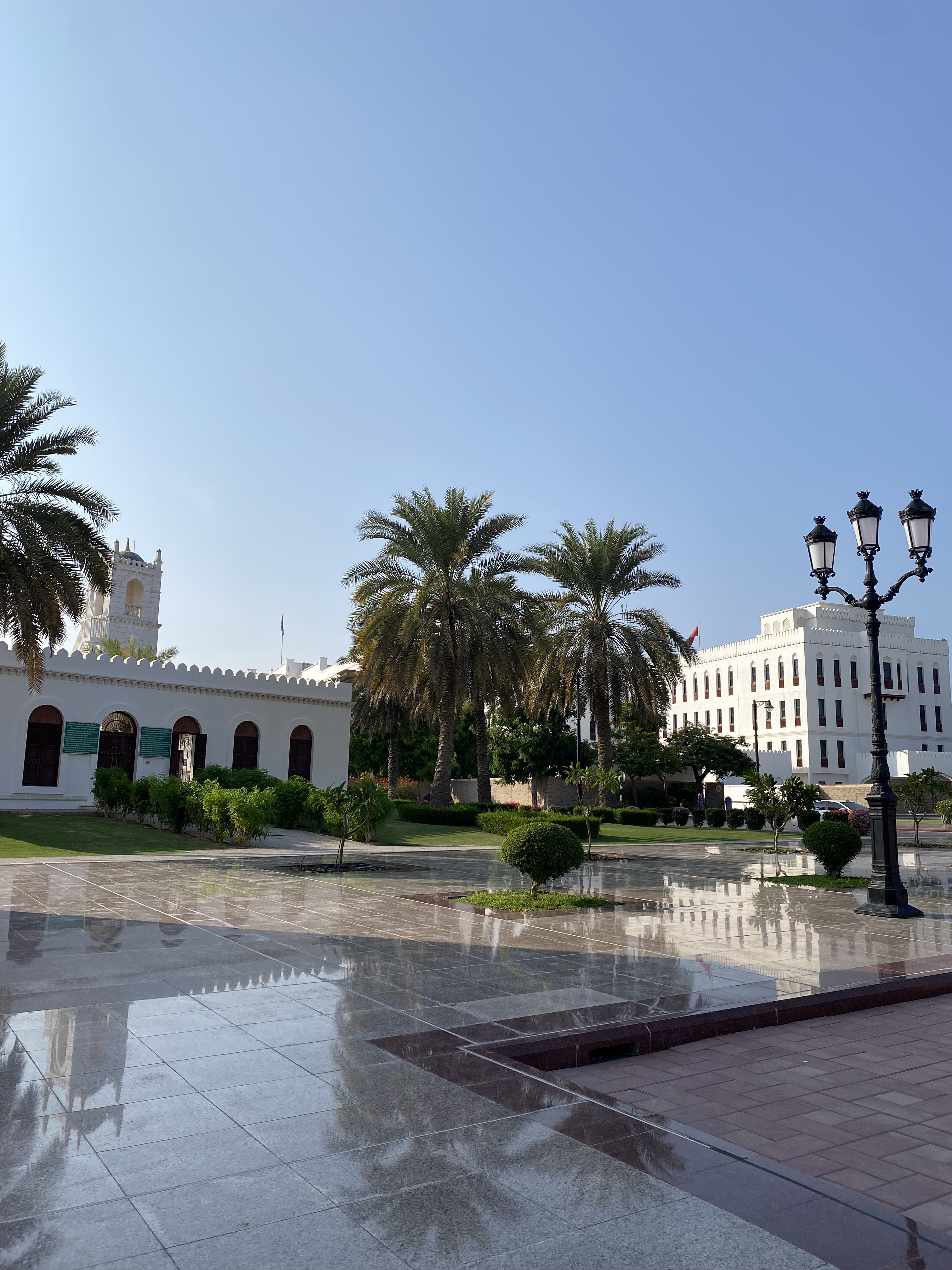
Oman: A Journey Through Royal Grandeur, and Timeless Heritage
Exploring Muscat, where history whispers through ancient forts, architecture tells stories of royalty, and the Arabian Sea paints a beautiful picture of tranquillity.
Some destinations surprise you with their beauty, while others leave you with memories that linger long after you have returned home. Oman was one such experience for me. My visit to this beautiful country was an opportunity to discover a fascinating blend of history, culture, architectural brilliance and natural beauty. From magnificent mosques and royal landmarks to centuries-old forts, traditional marketplaces and pristine beaches, every place I visited revealed a different facet of Oman’s personality. Though it was a short tour, the peace and calmness prevailing at that place, along with the hospitality of the people, were truly commendable.
Muscat, the capital city, has a charm that is quite different from the fast-paced glamour of some of its neighbouring Gulf destinations. It is elegant yet understated, modern yet deeply connected to its traditions. The mountains provide a dramatic backdrop, while the coastline adds a refreshing sense of calm. As I explored the city, I found myself admiring not just its landmarks but also the way Oman has preserved its cultural identity while embracing modernity.


Here are some of the places that made my journey memorable.
The Royal Opera House: Where Architecture Meets Art
My exploration of Oman’s architectural elegance took me to the magnificent Royal Opera House Muscat. Even before stepping inside, the building made a striking impression. Its pristine white façade, traditional Omani architectural elements, and beautifully landscaped surroundings create an atmosphere of understated grandeur.
The opera house is much more than an architectural landmark. It represents Oman’s appreciation for music, performing arts and cultural exchange. Established under the vision of Sultan Qaboos bin Said, it has become an important platform for international artistic performances.
As I admired the structure, I was particularly fascinated by the intricate craftsmanship and the attention to detail. The interiors, with their luxurious finishes and magnificent auditorium, reflect a beautiful marriage of traditional artistry and contemporary design.
Standing there, I could appreciate how a country can celebrate its heritage while creating spaces that connect it with the rest of the world. It was certainly one of the most elegant places I visited in Muscat.


National Museum: A Walk Through Oman’s Glorious Past
A visit to the National Museum of Oman was like turning the pages of a history book, except that the stories were unfolding right before my eyes.
Located in Old Muscat, the museum offers a fascinating insight into the country’s civilisation, maritime traditions, cultural evolution and historical achievements. Its galleries showcase archaeological discoveries, traditional clothing, jewellery, weapons, manuscripts and objects that reflect the everyday lives of people across different periods.
What I particularly enjoyed was discovering Oman’s historical connections with the wider world. Its strategic geographical position along important maritime trade routes helped shape its relationship with Africa, India and other parts of Asia.
Walking through the galleries made me realise how much history is preserved within this beautiful country. For someone who enjoys exploring places beyond their popular tourist attractions, the National Museum was a rewarding experience.
It gave me a deeper understanding of Oman and made the rest of my sightseeing even more meaningful.


Sultan Qaboos Grand Mosque: An Experience Beyond Architecture
No visit to Muscat would be complete without witnessing the magnificence of the Sultan Qaboos Grand Mosque.
One of the largest mosques in the country, this architectural masterpiece is breathtaking. Its imposing structure, beautiful minarets, expansive courtyards, and exquisite Islamic detailing create an atmosphere of serenity and grandeur.
As I entered the complex, I was struck by the sheer scale of the architecture. The beautifully maintained gardens and open spaces complement the mosque’s magnificent design. Every corner seems to reflect precision, devotion, and artistic excellence.
The prayer hall is particularly impressive, with its elaborate decorations, intricate patterns, and magnificent chandelier. The craftsmanship is remarkable, and the attention given to even the smallest architectural details is extraordinary.
But beyond its visual appeal, what makes the mosque special is the sense of peace it inspires. There is something incredibly calming about standing within such a magnificent place, observing its beauty and appreciating the devotion and artistry behind its creation.
It was undoubtedly one of the highlights of my Oman visit.


Al Mirani Fort: Stories From Another Era
From religious architecture, I moved towards a different chapter of Oman’s history with a visit to Al Mirani Fort.
Perched dramatically on a rocky elevation overlooking the harbour of Old Muscat, Al Mirani Fort is one of the city’s most recognisable historical structures. Built during the Portuguese period in the 16th century, the fort played an important role in protecting Muscat’s coastline.
The first thing that catches your attention is its imposing presence. Its stone walls, elevated position, and strategic location overlooking the sea make it easy to imagine how important this structure must have been for defending the city centuries ago.
Although the fort is not generally open to visitors, viewing it from the surrounding areas offers wonderful photographic opportunities. The contrast between the historic fort, the surrounding mountains, and the blue waters creates a picturesque scene.
I found myself imagining the stories these walls could tell — of sailors, traders, battles and the changing fortunes of a historic port city.
Some places do not need elaborate explanations to leave an impression. Al Mirani Fort is certainly one of them.


Mutrah Corniche: Where the City Meets the Sea
One of my favourite experiences in Muscat was spending time around Mutrah Corniche.
There is something magical about a waterfront promenade, particularly when it combines beautiful sea views with a backdrop of traditional architecture and rugged mountains. Mutrah Corniche offers precisely that.
The long waterfront stretch provides spectacular views of the harbour, fishing boats, traditional dhows and the surrounding hills. The sight of the blue waters meeting the dramatic landscape makes it a wonderful place to pause and enjoy the beauty of Muscat.
As I walked along the Corniche, I enjoyed observing the everyday rhythm of the city. The waterfront has a relaxed atmosphere, with visitors and locals enjoying the surroundings.
The changing colours of the sky, the gentle sea breeze and the picturesque setting make this area particularly appealing for photography.
For me, Mutrah was not just another sightseeing destination. It was a place to slow down, breathe and enjoy the simple pleasure of being beside the sea.


Qurum Beach: A Beautiful Escape by the Arabian Sea
If Mutrah offers a charming combination of heritage and waterfront life, Qurum Beach introduces you to a more relaxed and contemporary side of Muscat.
Stretching along the coastline, Qurum Beach is known for its beautiful sandy shoreline, open spaces and peaceful atmosphere. The Arabian Sea creates a magnificent backdrop, while the sound of the waves adds to the tranquillity.
I particularly enjoyed the open landscape and the sense of space. It is the kind of place where you can simply walk along the shore, admire the horizon and forget about the rush of everyday life.
The beach is popular with locals and visitors alike, especially during the cooler hours of the day. Its surrounding neighbourhood also has cafés, restaurants and leisure spaces, making it a pleasant destination to spend some time.
Every traveller has a favourite kind of place. For me, beaches have always offered a special sense of freedom. Qurum Beach was another opportunity to enjoy that feeling, surrounded by the natural beauty of Oman’s coastline.


Mutrah Souk: A Colourful Celebration of Omani Culture
No travel experience is complete without exploring its traditional marketplaces, and my visit to Mutrah Souk was an absolute delight.
Located close to the Corniche, Mutrah Souk is among the oldest and most popular traditional marketplaces in Oman. The moment you enter its narrow, winding lanes, you are transported into a different world.
The souk is a wonderful sensory experience. The fragrance of frankincense fills the air, while colourful displays of textiles, traditional garments, silver jewellery, handicrafts, perfumes, spices and souvenirs compete for your attention.
I loved wandering through the little shops, looking at the intricate handicrafts and discovering the variety of traditional Omani products. The marketplace beautifully reflects the country’s trading heritage and its historical connections with different parts of the world.
The friendly shopkeepers, the traditional architecture and the lively atmosphere make shopping here an experience in itself.
I believe that markets often reveal more about a destination than many of its monuments. They allow you to observe local traditions, interact with people and take home little reminders of your journey. Mutrah Souk offered all of that and more.

Oman: Memories That Stay With You
As I look back at my visit, I realise that what made Oman special was not just the individual attractions but the experience of discovering so many different dimensions of one destination.
The Royal Opera House introduced me to its artistic sophistication. The National Museum gave me a glimpse into its rich history. The Grand Mosque left me mesmerised by its architectural brilliance and serenity. Al Mirani Fort transported me to another era, while Mutrah Corniche and Qurum Beach allowed me to soak in the beauty of the Arabian Sea. And the colourful Mutrah Souk brought me closer to the country’s traditional lifestyle.
Oman is a destination that does not need to shout to make its presence felt. Its beauty lies in its balance — between the old and the new, the majestic and the simple, the historical and the contemporary.
For me, this journey was not merely about ticking off popular tourist attractions. It was about experiencing a country through its architecture, stories, people and landscapes.
And perhaps that is what travel is truly about — collecting experiences, discovering unfamiliar worlds and returning home with memories that become a part of your own story.
Oman, with its timeless charm and understated elegance, certainly earned a special place in my travel diary.
Editorial note: I have kept the narrative in the first person so it reads like your personal travelogue rather than a conventional destination guide. You can make it even more authentic by adding your own photographs and a few specific moments from your visit, particularly your experience inside the Grand Mosque and your walk through Mutrah Souk.

Author
Kuntala Bhattacharya
A travel enthusiast craving to explore the exotic destinations in the world, deciphering the mysteries and the thrill concealed in them.


