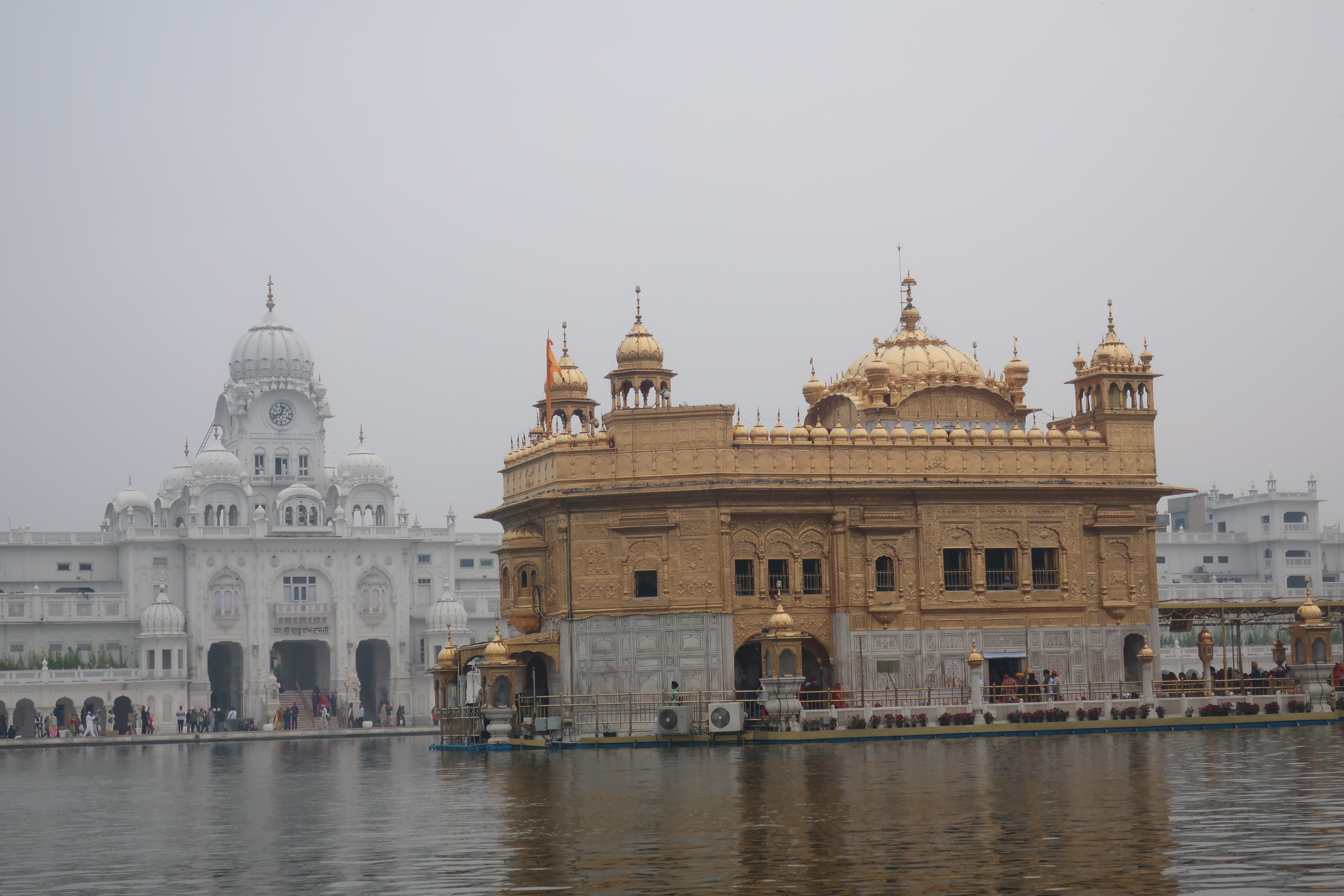
Holiest Religious Sites In Punjab, India
Punjab in India is the birthplace of the Sikh religion. Influenced by the teachings and philosophy of Guru Nanak, the founder of Sikhism, the majority of the people of Punjab are Sikhs. However, the state is highly religiously tolerant. People of other faiths and religious backgrounds live in peace and harmony in Punjab. Such a benevolent atmosphere only helps swell the number of holiest religious sites in Punjab. Besides Sikh Gurudwaras, there are other holiest religious sites in Punjab belonging to Hindu, Muslim, Christian, Buddhist, and Jain believers. A few significant ones are mentioned below for your reference.
Golden Temple, Amritsar
When you think of the holiest religious sites in Punjab, the Golden Temple in Amritsar ought to be the numero uno in the list. Those of you who have been to the site would clearly know the reason. Golden Temple or Harmandir Sahib is the holiest religious site for the Sikh community. The temple was founded by Guru Ramdas Sahib. Constructed between 1585 and 1604, the temple got its name because of the golden colour of the sanctum. As you approach the temple, a majestic structure welcomes you in the courtyard with a narrow entrance and descending steps. You are required to remove your footwear and cover your head before entering the premises. It symbolizes humility and the journey of the soul towards the divine. A few steps down, and you will have the amazing view of the Golden Temple surrounded by Sarovar, a man-made, large holy water tank. Devotees take in a ritual dip here. There are large, colourful fish in the pond. Reflection of the temple in the pond makes it all the more beautiful. By dusk, when the lights are lit, the site becomes absolutely breathtaking.


The marble structure with the gold foil of the temple reflects a fusion of Islamic and Hindu architectural styles. During the reign of Maharaja Ranjit Singh (1799-1849), the upper floor of the temple was covered in 750 kilos of pure gold. Beyond its magnificent structure, what attracts millions of visitors to the site are the Sikh values such as equality, service, and community. If you are properly dressed and conduct yourself well in the premises, irrespective of your religious background, you are welcome to visit the Golden Temple. Sanctum Sanctorum houses the Adi Granth, the holy scripture of Sikhism.
You can also enjoy the Langar, free food from the community kitchen. Also, note that you can get affordable accommodation within the premises. I would say it is ideal to stay for a couple of nights to completely experience and immerse yourself in the sentiment of the Golden Temple.
Tarn Taran Sahib, Amritsar
Tarn Taran Sahib is another of the holiest religious sites in Punjab that is important to Sikhism. It was founded by Sikh Guru, Sri Arjan Dev Ji, in 1590. The white, beautiful three-story structure has golden colour domes much like the Golden Temple. The walls and roof of the temple are embellished with intricate works. In the sanctum of the temple, on an elevated spot, is placed the Guru Granth Sahib. A large Sarovar or water pond by the side of the temple is another notable attraction. The pond is considered to be the largest of its kind associated with a Gurudwara. Continuous chanting of hymns and spiritual teachings in the temple premises envelops you in a spiritual mood as soon as you step in. Baisakhi and the Tarn Taran Heritage Festival attract the maximum crowd to the temple.

Durgiana Temple, Amritsar
Durgiana is a Hindu temple dedicated to Goddess Durga. Interestingly, the structure of the temple strikes a notable resemblance to the Golden Temple. It was constructed by Harsai Mal Kapoor in 1921. His statue can be found at the main entrance of the temple. The temple is surrounded by a waterbody with a bridge giving access to the temple. Mughal and Sikh styles of architecture with carvings and images from Hindu mythology keep the interior of the temple splendid. The white marble works of the temple is complete with golden dome. The temple complex houses shrines dedicated to Lord Krishna, Lord Vishnu, and Hanuman. Janmashtami celebrations, Navratri, and Diwali are the main festivals here.

How to visit Amritsar?
Amritsar has an International Airport and a railway station. The city is well-connected by road. Hiring a taxi or rikshaw from the town gives you an easy access to the doorstep of the aforementioned temples.
Devi Talab Mandir, Jalandhar
Interestingly, here is one of the other holiest religious sites in Punjab that has a waterbody adjacent to it. The centuries-old temple is dedicated to Goddess Durga. The main temple is situated in the middle of the pond. That is where you can see idols of Ma Vaishno, Ma Saraswathy, and Ma Lakshmi. Before entering the main temple, you can visit Shri Tripurmalini Dham within the complex. It is a sacred place where the body parts of Sati Devi are believed to have fallen. And the idol installed there is discovered from the pond adjacent to the temple. Of late, the temple has seen large-scale renovation works. The pyramidal structure of the main temple is covered with plates of gold. And the cave temple here resembles the Amarnath Cave temple in Jammu and Kashmir. Inside the cave temple, you get to see artworks from Hindu mythology and sacred texts.

Within the complex, you can find food and accommodation facilities as well. Another notable feature about the temple is the “Harballabh Sangeet Sammelan”. It is a Hindustani classical musical festival organized every year in the month of December. Navaratri and Durga Puja are the major festivals at the temple.
Jalandhar is nearly 75 kilometres away from the nearest airport in Amritsar. Merely two kilometres away, there is the Jalandhar City railway station, and the temple is well connected by road services.
Moorish Mosque, Kapurthala
Moorish Mosque is a religiously, historically, and archaeologically important site in Punjab. It is the oldest mosque in the state. Therefore, it has significant value for the Muslim community. As a master piece of unique architectural design, it is now taken care of by the Archaeological Survey of India. It was built during the reign of Maharaja Jagatjit Singh (1877-1947), the last ruler of Kapurthala. The French architect, Monsieur M Manteaux, who designed the mosque, drew inspiration from the Grand Qutubiyya Mosque in the city of Marrakesh, Kingdom of Morocco. The tower, intricate designs and carvings, floral reliefs, glass, marble, and wooden patterns, along with the light red colour of the mosque, make it a unique edifice. Eid al-Fitr and Eid al-Adha are the two major occasions that attract most people to the mosque.

Amritsar airport is nearly 80 kilometres away from Kapurthala. Kapurthala has a railway station and is well connected by road as well.
Apart from those mentioned, there are many other holy places in Punjab. And yes, to the list, add other historic places like Jallianwala Bagh, Wagah Border, and many more to make your visit to Punjab worthwhile.

Author
Deepu Paul
A Travel enthusiast, Foodie, and Published author craving to explore the intricate beauty of nature and its gift of delectable treats. Pens down his thoughts and experiences to present a delightful journey for his readers


